What Halifax’s Housing Demand Means for a Seller Listing Now
Halifax’s housing demand means there are real buyers in the market, but it does not mean your home will sell quickly or at the price you hope for. Population growth and a heavy pipeline of new development support demand across the region, while your result depends on your property type, price point, condition, and the specific homes competing with yours. The first job is to separate the regional story from your own competition.
Key Takeaways
- Halifax has designated 16 Provincial Special Planning Areas intended to support as many as 57,245 new residential units, but that is planning capacity, not homes available to buy today.
- The Bedford West Sub-Area 10 development agreement approved on October 5, 2026 allows a nine-storey building with 98 units and five single-unit homes, which is an approval, not finished inventory.
- The October 2026 market evidence points to more listed supply and longer marketing times than a year earlier, and the September 2026 benchmark price sat below its year-earlier level, so pricing against your actual competition matters more than headline demand.
- Halifax-Dartmouth MLS® statistics cover a broader area than any single community, so they cannot tell you how demand on your street or in your price band is behaving.
- Waiting for spring changes your competition as well as the calendar, and it does not guarantee a stronger outcome.
How much do new developments in Bedford West, Dartmouth, and Burnside compete with my listing?
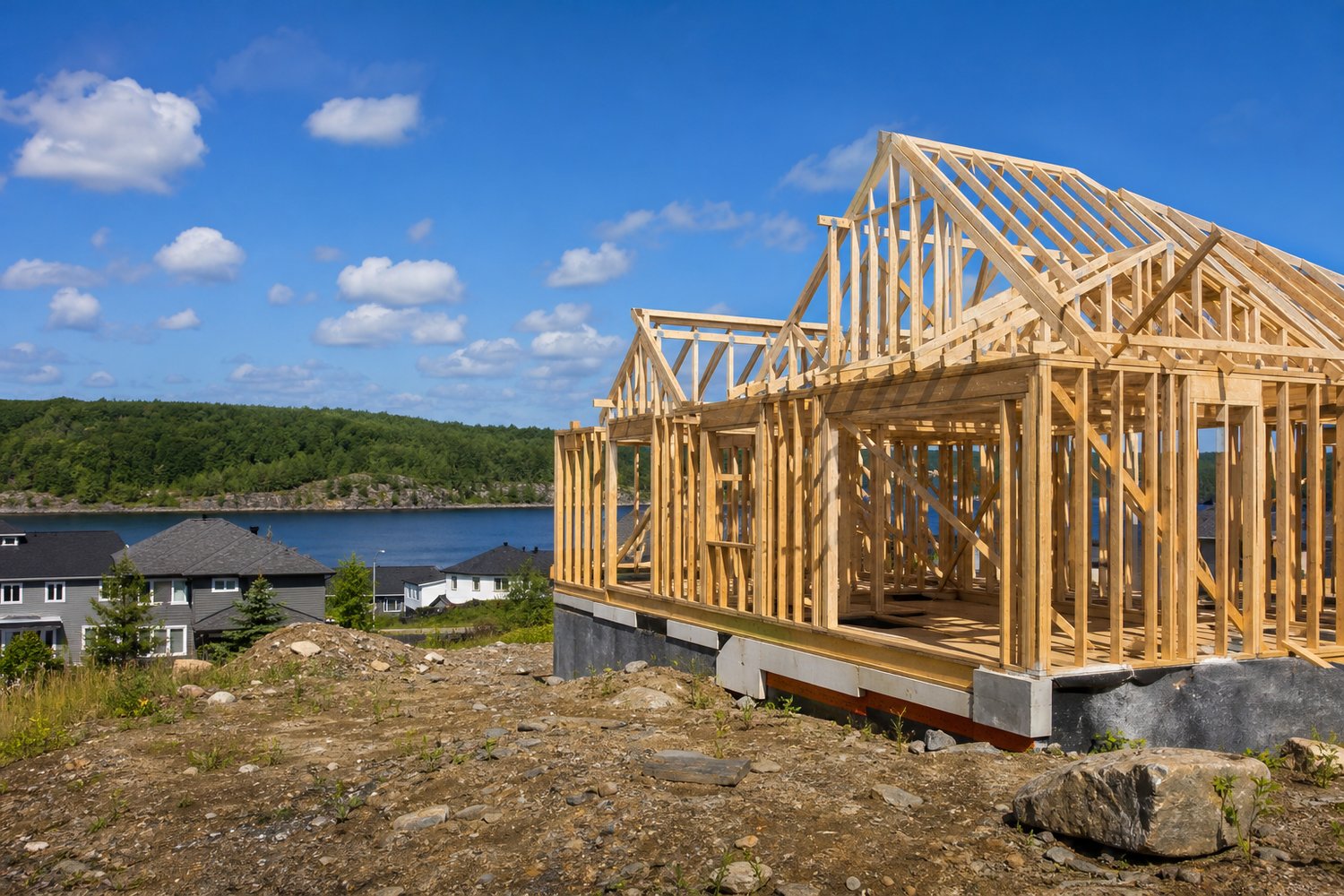
Only completed homes that are actually for sale compete with your listing, and most of what you read about in Halifax is still at an earlier stage. Planned units, approved agreements, and site preparation shape the region's long-term outlook, but they do not put a competing home in front of your buyer next month.
Know the stage before you worry about the number
Halifax Regional Municipality’s 2026-2030 Strategic Plan points to billions of dollars in housing, transit, community-facility, and infrastructure projects that are underway or planned. That supports a growth story. It does not establish buyer demand for any one home or price segment.
The same goes for the Provincial Special Planning Areas. Sixteen areas are intended to support as many as 57,245 residential units, and I treat that as a ceiling on what could eventually be built, not a count of what exists.
Here is how I sort what my sellers read in the news:
| Stage | Local example | What it means for your listing |
|---|---|---|
| Planning capacity | 16 Provincial Special Planning Areas, up to 57,245 units | Long-term backdrop only, no direct competition today |
| Application under review | Paper Mill Lake subdivision in Bedford, 214 units/lots and one commercial parcel over four phases | Not guaranteed to proceed as filed, so no immediate effect |
| Approved agreement | Bedford West Sub-Area 10, nine-storey building with 98 units and five single-unit homes | Signals future supply, timing still depends on construction |
| Early site work | Roughly 48 hectares near Sandy Lake in Bedford, clearing and excavation approved | Housing construction on that site was not authorized by this approval |
| Completed and listed | Homes on the market in your area and property type | The only stage that competes with you directly |
The Bedford West approval comes from the Government of Nova Scotia, and the Paper Mill Lake figures come from Halifax’s active planning applications list. A CBC News report from November 2, 2026 describes the Sandy Lake clearing approval and a planned 6,400-unit neighbourhood tied to the Clayton Developments site. Those are plan figures, not completed inventory.
What about Dartmouth and Burnside?
Development in Dartmouth can affect how buyers compare an older home to newer options, but the effect depends on what is actually listed near you. I won't hand you a unit count I can't source for Dartmouth, and I won't put a number on Burnside's effect either. Both are better read through the homes competing in your property type and price range than through a regional headline.
If you own an older home, the useful question is whether a buyer touring your place will also be touring something newer at a similar price. That is a comparison I can run for you property by property.
Is Halifax still a good market for sellers heading into winter?
It can be, but the conditions reward sellers who price against current competition rather than last year's headlines. Halifax’s housing demand means different things at different price points and in different parts of the region, so a good market on paper is not the same as a good result for your listing.
What the regional indicators are saying
The October 2026 market evidence points to more listed supply and longer marketing times than the comparable period in 2025. The reported September 2026 benchmark price was also below its year-earlier level. Those figures come from Halifax-Dartmouth MLS® reporting by the Nova Scotia Association of REALTORS®, which covers a wider area than Bedford West, Dartmouth, Burnside, or any single neighbourhood.
That does not mean every seller faces weak demand. It means buyers have more to choose from, and they are taking more time to choose. I do not have a reliable current breakdown of buyer activity by price band or property type, so I won't claim that any one range or housing type is outperforming. For official population and immigration figures, Statistics Canada and the Government of Nova Scotia are the places to check. I've also written about how population growth feeds housing demand in Halifax, and my broader read on what is happening in the market is worth a look alongside this one.
Should I wait until spring to list?
Not automatically. A longer average marketing time is a reason to price and present carefully, not a signal that waiting fixes the problem. Spring 2027 is ahead of us, and waiting changes your competition as well as the calendar. Some of the planned and approved projects above may reach the market in the meantime, while your carrying costs and life plans keep running.
Whether to list now or later depends on your timeline, your property, and what is actively listed near you. That is a decision to make with current local numbers in front of you.
What steps should I take to list well when demand is strong overall but supply is rising?
Start with your own comparables, not the regional average, then set a price and presentation plan that fits your home's real competition. I treat price as a positioning tool: it decides which buyers see your home first and how confident they feel when they walk in.
- Identify your true competition. Pull active, sold, and expired listings in your property type, size range, and nearby area. A Timberlea townhouse and a new single-family in Bedford West are not usually on the same shortlist.
- Compare your area to the region. Ask whether homes like yours nearby are selling faster or slower than the Halifax-Dartmouth headline. Demand on your street can run stronger or weaker than the regional picture.
- Check for new-build overlap. If completed new homes are listed near you at a similar price point, your pricing and presentation need to answer them. If they are still at the approval or site-work stage, they are background, not competition.
- Set your price with a plan for adjustments. Decide in advance how you will read buyer feedback and showings, and what you will change if early interest is thin.
- Invest in digital presentation. Buyers search online first, so professional photography, video, and a strong online listing carry more weight when they have more homes to compare.
- Match the plan to the home. I don't use one listing plan for every seller. My custom listing strategy approach starts with your property, your timeline, and your goals.
Every situation is different, and the only way to know where your home sits is to run the comparables with someone who knows this market. This is exactly the kind of work I do with sellers before we ever list.
How can I tell whether demand for my neighbourhood is stronger than the overall market?
Look at recent sold and active listings in your own area and property type, then compare their marketing times and price changes to the Halifax-Dartmouth picture. If homes like yours nearby are moving faster than the region, your local demand is stronger than the headline. If they are sitting, price and presentation deserve a hard look.
The headline figure is an average of very different homes in very different places. It is a starting point, not a forecast for your listing.
If you want to see how other sellers have found working with me, you can read my reviews on Google and Realtor.com.
FAQ
Is Halifax still a good market for sellers in November 2026?
It can be for sellers who price against current competition. The October 2026 evidence shows more listed supply and longer marketing times than a year earlier, and the September 2026 benchmark price was below its year-earlier level. That calls for careful pricing, not panic, and I can walk you through the current numbers for your property type in a consultation.
How much competition do sellers face from new construction in Bedford West?
It depends on how far each project has progressed. The Bedford West Sub-Area 10 agreement approved on October 5, 2026 allows a nine-storey building with 98 units and five single-unit homes, but approval is not the same as completed homes for sale. Only finished homes that are listed near your price point compete with you directly.
Does development in Dartmouth affect the value of an older Dartmouth home?
It can, but the effect varies by property and price point, and it is not automatic in either direction. Buyers compare what is available to them, so the real question is whether newer options are listed near you at a similar price. I'd review the actual comparables before drawing a conclusion.
Does a longer average time on market mean I should wait until spring to list?
No, a longer average marketing time does not by itself mean you should wait. Waiting changes your competition and your carrying timeline, and a later listing is not guaranteed a stronger result. The better move is to look at how homes like yours are performing now and decide from there.
Should I price my Halifax home differently because inventory has increased?
Yes, you should price against the homes buyers can actually choose from today, not against last year's sales alone. More listed supply gives buyers more comparison points, so your price needs to hold up next to active listings as well as sold ones. A local market analysis shows where your home fits.
Your next step
Halifax’s housing demand means opportunity when your pricing and presentation are built around your real competition, not around regional headlines. If you are weighing a listing in Bedford, Dartmouth, or anywhere else in Halifax, I'll review the comparables for your specific home and help you decide on timing and price. Book a seller consultation and we'll look at the current numbers together. You can also browse more on selling a home in Halifax.
About Sandra Pike
Sandra Pike is an award-winning Halifax real estate agent and trusted listing specialist who has been licensed since 2010. Known for her strategic marketing, honest advice, and proven results, she helps homeowners position their properties effectively and attract serious buyers.
Royal LePage Atlantic · 902-478-8711
Equal Housing Opportunity. Sandra Pike, Salesperson, Royal LePage Atlantic. Regulated by the Nova Scotia Real Estate Commission. This article is general information, not legal, tax, or financial advice; confirm your own numbers with your real estate lawyer, tax advisor, or lender. I agree to be contacted by Royal LePage Atlantic via call, email, and text for real estate services. Message and data rates may apply.


